New to Rust? Grab our free Rust for Beginners eBook Get it free →
Kafka Manager Setup for Cluster Management

Choosing an administration tool for an Apache Kafka cluster starts with checking which cluster mode it supports. Kafka Manager, now called CMAK, is a browser-based Apache Kafka administration app.
This article explains when CMAK’s ZooKeeper-based setup fits and how to configure and start it.
TL;DR
Kafka Manager is now called CMAK, and its ZooKeeper dependency makes it a legacy choice rather than a fit for every Kafka cluster.
- Use this setup only when the cluster and CMAK version are compatible with the ZooKeeper-based workflow.
- Configure CMAK’s own ZooKeeper endpoint separately from the Kafka cluster’s ZooKeeper endpoint.
- Kafka 4.0 removed ZooKeeper mode, so choose a UI that supports KRaft for those clusters.
What Is Kafka Manager?
Kafka Manager, now CMAK (Cluster Manager for Apache Kafka), is a browser-based Apache Kafka administration app.
I use CMAK here because that is the name used by the upstream project.
CMAK’s default web port is 9000.
Apache Kafka 4.0 removes ZooKeeper mode, so this ZooKeeper-dependent tool does not fit that cluster mode.
The upstream release list includes 3.0.0.6. See the site’s multi-broker Kafka setup and ZooKeeper cluster guide for prerequisites.
Its functions include topic configuration, partition reassignment, and preferred replica election.
To migrate an existing installation, copy application.conf and consumer.properties into the CMAK distribution, review their endpoints and credentials, then use bin/cmak.
| Area | What CMAK helps inspect or change |
|---|---|
| Cluster and brokers | Broker membership, health details, and replica distribution. |
| Topics and partitions | Topic settings, partition counts, and reassignment operations. |
| Consumers | Consumer groups and reported offsets. |
How to Set Up Kafka Manager Step by Step
Check compatibility and configure CMAK before registering a cluster.
Step 1: Check the runtime and cluster mode
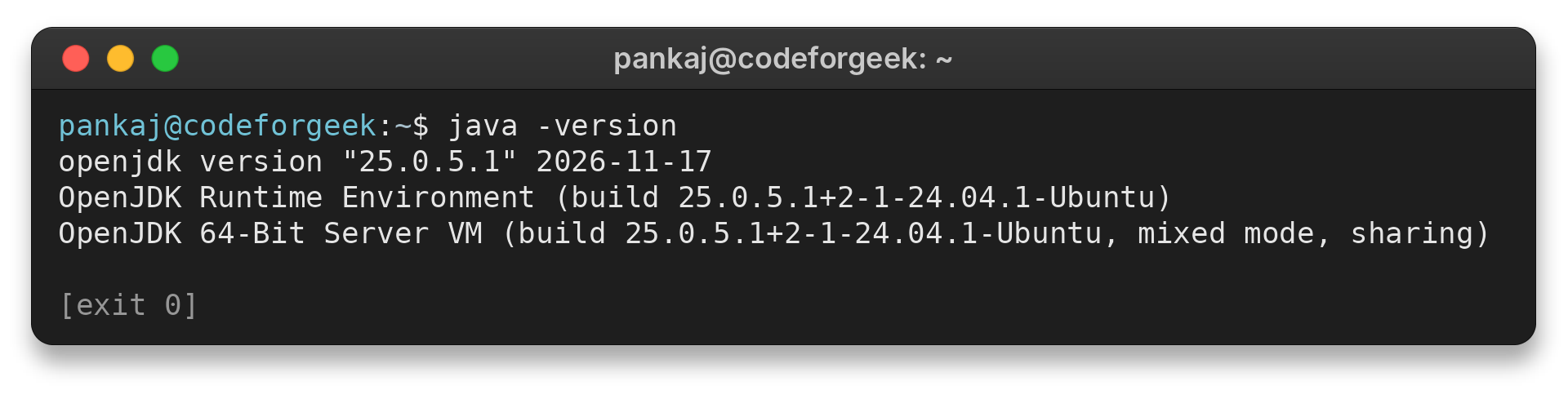
CMAK requires Java 11 or later. The runtime check returned:
java -version
openjdk version “25.0.5.1” 2026-11-17
OpenJDK Runtime Environment (build 25.0.5.1+2-1-24.04.1-Ubuntu)
OpenJDK 64-Bit Server VM (build 25.0.5.1+2-1-24.04.1-Ubuntu, mixed mode, sharing)
Confirm the CMAK host can reach its ZooKeeper endpoint and the Kafka brokers before registration.
Step 2: Configure CMAK’s own ZooKeeper connection
Set CMAK’s state ZooKeeper ensemble in its application configuration or ZK_HOSTS, using addresses reachable from the process.
Use cmak.zkhosts for new configuration, with ZK_HOSTS as an environment-based alternative and kafka-manager.zkhosts deprecated.
cmak.zkhosts="zk-a.example.net:2181,zk-b.example.net:2181,zk-c.example.net:2181"
# Or set ZK_HOSTS to the comma-separated endpoints before startup.
My lookup found no address for kafka-manager-zookeeper, while localhost resolved to ::1. A container service name may not resolve outside its network.
Step 3: Set access credentials before exposing the web app
Set unique KAFKA_MANAGER_USERNAME and KAFKA_MANAGER_PASSWORD overrides, keep them out of source control, and restrict access behind a trusted HTTPS proxy.
Step 4: Build and start CMAK
From the checked-out CMAK release, run the documented packaging command:
cd cmak-src && ./sbt clean dist
Cannot use JVMCI compiler: No JVMCI compiler found
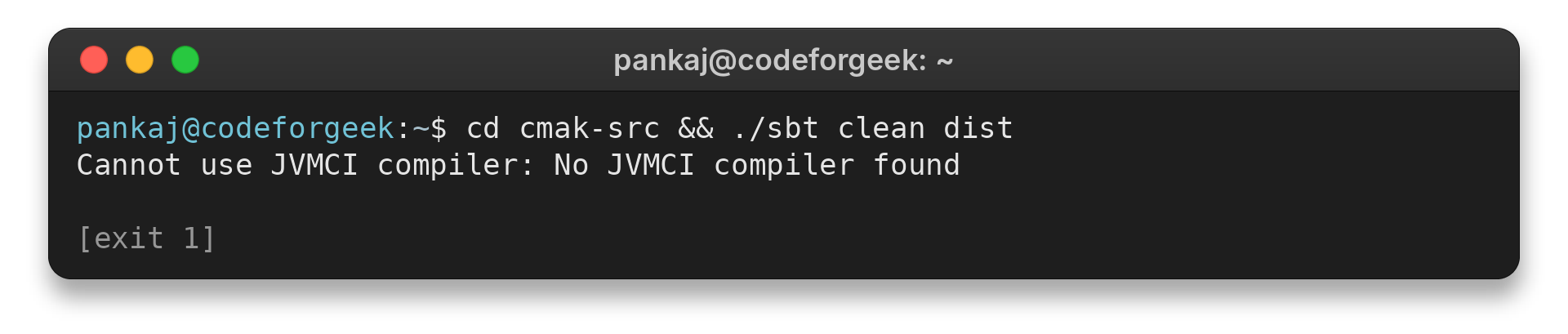
The bundled wrapper enables a JVMCI compiler option by default on Java 10+. Overriding it did not fix this build: Java 21 reached Scala 2.12.10, then reported a bad constant pool index and unsupported Security Manager. Upstream documents launching an extracted distribution with bin/cmak on port 9000.
After startup, confirm the listener. If it exits, inspect the first configuration or dependency error.
Step 5: Open CMAK and register the Kafka cluster
Open the host on port 9000 from an allowed client. In the cluster menu, name the entry and enter the Kafka cluster’s ZooKeeper quorum.
Use CMAK’s state endpoint here only when both services share an ensemble. Optional JMX polling needs reachable broker JMX endpoints.
Save and check the listed brokers and topics. If absent, verify quorum reachability, broker access, and the selected Kafka version.
Limits and Connection Checks
Resolve hostname and connection failures before changing Kafka settings.
| Symptom | Likely cause | Check or fix |
|---|---|---|
| Host name cannot be resolved | The configured name is outside the manager’s DNS or container network. | Resolve the name from the CMAK host and use a reachable service address. |
| Connection refused on port 2181 | Wrong endpoint, stopped listener, or network policy. | Check the ZooKeeper listener and route from CMAK’s network namespace. |
| Web page loads but no cluster appears | The CMAK state connection is mistaken for a registered Kafka cluster. | Add the cluster in the UI with its own ZooKeeper quorum. |
| Cluster uses KRaft or Kafka 4.0 | CMAK’s ZooKeeper-based integration cannot serve this cluster. | Choose a Kafka UI that explicitly supports KRaft instead. |
Conclusion
Use CMAK only when its ZooKeeper model matches the cluster and your access policy.
Consult the CMAK upstream README, its release list, and the Apache Kafka 4.0 upgrade guide for version details.
FAQ
Common compatibility and configuration questions:
Is Kafka Manager the same as CMAK?
Yes. CMAK means Cluster Manager for Apache Kafka and was previously named Kafka Manager.
Does CMAK include its own ZooKeeper server?
No. Configure a reachable ZooKeeper service for CMAK’s stored settings. The cluster you add has separate connection details.
Can CMAK manage a Kafka 4.0 cluster?
No. Kafka 4.0 removed ZooKeeper mode, while CMAK’s upstream configuration requires ZooKeeper. Use a UI that supports KRaft.