New to Rust? Grab our free Rust for Beginners eBook Get it free →
What Is Blockchain? How It Works With Cryptocurrency

Blockchain is a shared record of transactions that a network maintains instead of one company or database administrator, while cryptocurrency is a digital asset that can use that record to track ownership and transfers.
What is a blockchain?
A blockchain stores records in ordered groups called blocks.
IBM describes blockchain as a shared, immutable digital ledger, where immutable means difficult to alter under the network’s rules rather than impossible to change under every governance decision or software upgrade.
How a cryptocurrency transaction reaches the chain
A cryptocurrency transaction is a signed instruction from an account that can initiate a state update, including a transfer from one account to another.
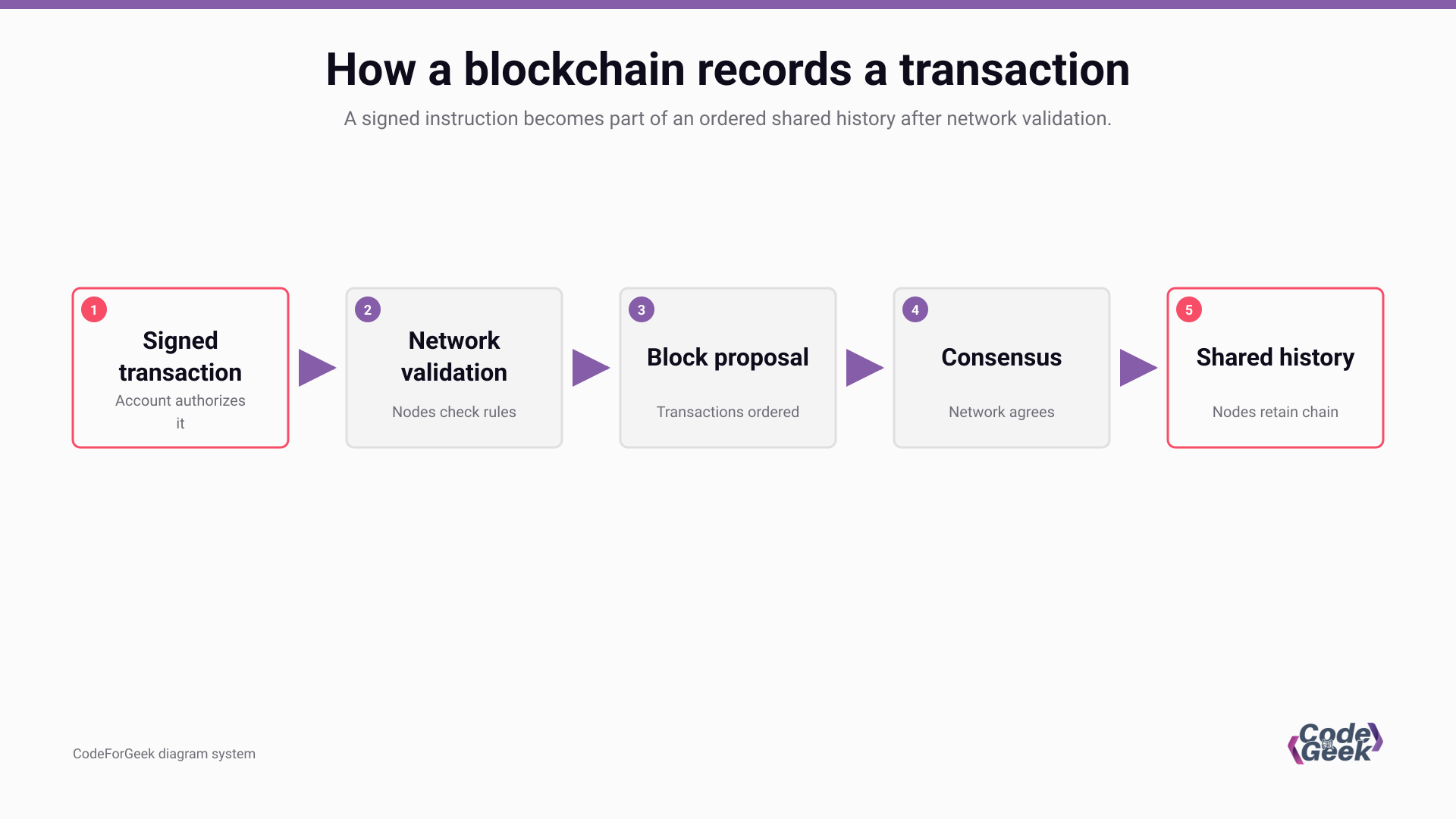
1. An account signs a transaction
The signature proves that the instruction came from whoever controls the account’s private key. It does not mean the transaction is accepted, and it does not reveal the private key to the network.
2. Nodes validate the instruction
Network nodes check the signature and the network’s rules. A blockchain does not trust an incoming message because it looks valid. Participants independently verify it before it can be included.
3. The network agrees on the next block
Consensus is the process a blockchain uses to decide which valid block follows the previous one.
Ethereum’s block documentation notes that blocks and the transactions inside them are strictly ordered, which helps participants reject a second attempt to spend the same balance.
Why hashes matter
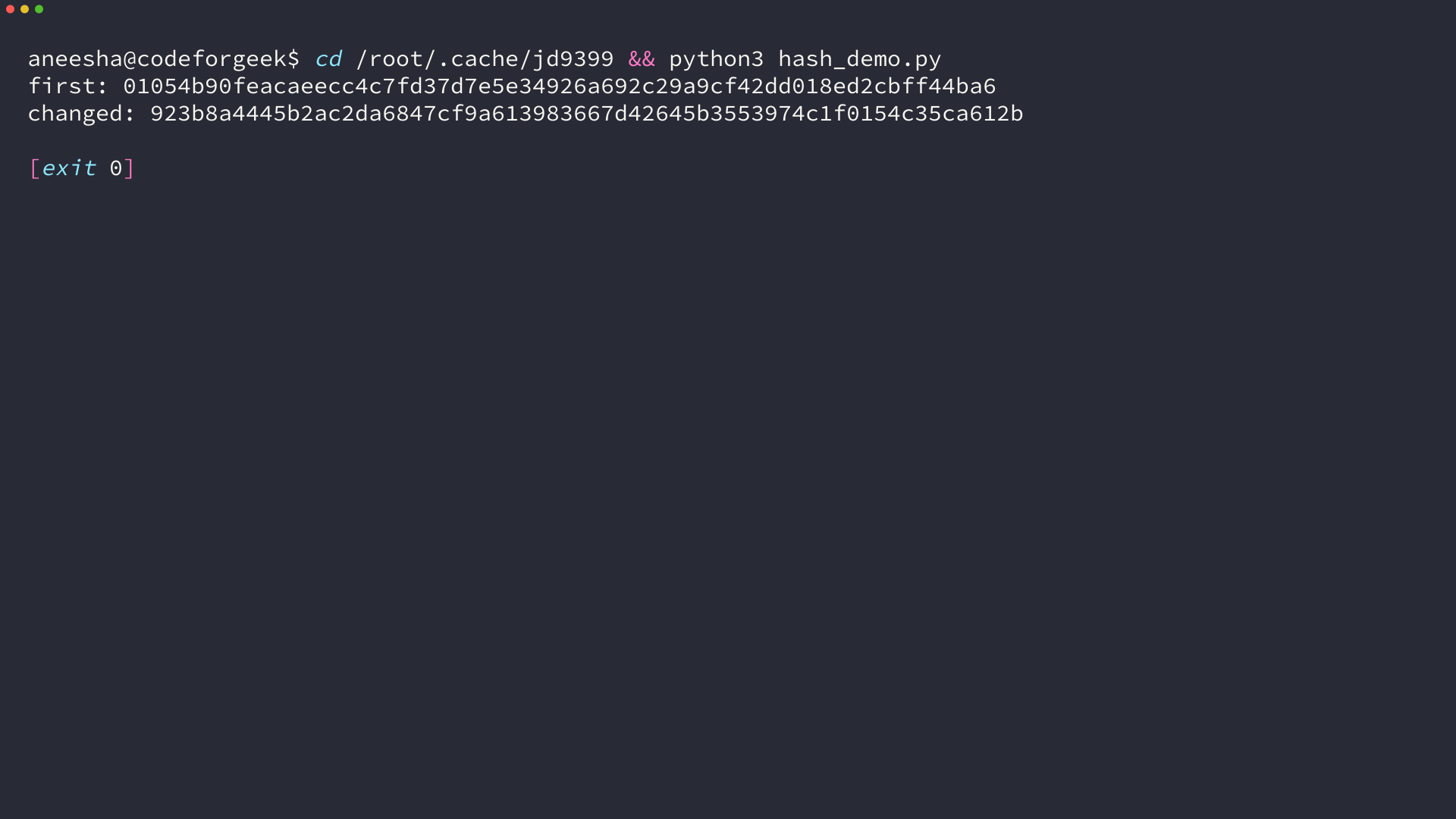
A cryptographic hash converts input data into a fixed-length digest. Hash functions help link records and reveal changes, because changing the input produces a different digest.
The following Python standard-library example produces distinct SHA-256 digests when the transfer amount changes by one character.
import hashlib

first = b"alice pays bob 2"
changed = b"alice pays bob 3"

for label, data in (("first", first), ("changed", changed)):
    print(f"{label}: {hashlib.sha256(data).hexdigest()}")
Save the file as hash_demo.py, then run this command from the directory that contains it.
python3 hash_demo.py
A hash alone does not secure a blockchain. It works alongside signatures, validation rules, distributed replication, and the consensus method used by that network.
Blockchain versus cryptocurrency
Blockchain is the record-keeping system and the rules for validating updates. A cryptocurrency is a digital asset or unit of account that can be represented within such a system.
Some blockchains support a native asset used for transaction fees or network incentives. Others can record assets, programs, or application state without making every use case a currency use case. For a direct comparison, see blockchain versus cryptocurrency.
What blockchain does not guarantee
A blockchain is not automatically private, cheap, fast, or suitable for every application. Public chains can expose transaction data, and distributed consensus can cost more time and computation than a conventional database.
It also cannot verify whether data was truthful before someone submitted it. The system can preserve a submitted record, but it cannot turn a false claim into a correct one.
Where to go next
Start with our introduction to blockchain if you want the broader architecture, then study blockchain consensus algorithms to understand why different networks choose different validation methods.
Keep one question in view as you learn: who is allowed to propose, validate, and change the record? The answer explains more about a blockchain than a list of coin names or exchanges.
Frequently asked questions
These answers separate the ledger, the asset, and the validation method.
Is blockchain the same as cryptocurrency?
No. Blockchain is a way to maintain and validate an ordered shared record. Cryptocurrency is a digital asset that can use a blockchain to record ownership and transfers.
Can a blockchain record be changed?
Changing an accepted record is difficult because nodes verify the chain and network rules. Governance decisions, software upgrades, and network-specific rules determine what changes are possible in practice.