New to Rust? Grab our free Rust for Beginners eBook Get it free →
5 Best ChatGPT Alternatives in 2026

ChatGPT covers a broad mix of writing, research, coding, image, and voice tasks, but a specialist can fit one workflow better. I checked five leading ChatGPT alternatives against their vendor pricing and product pages on July 17, 2026, then separated app subscriptions from application programming interface (API) billing so you can compare the cost you will actually pay.
Pick the alternative that matches your workload
Your best choice depends on where the work happens and what evidence the answer needs. The table gives you the shortest route to a useful trial.
| Alternative | Choose it for | Free access | Entry paid plan |
|---|---|---|---|
| Claude | Writing, document analysis, and coding | Yes, with usage limits | Pro at $20 monthly or $200 yearly |
| Google Gemini | Google apps, mixed media, and long files | Yes | Google AI Plus at $4.99 monthly |
| Perplexity | Web research with citations | Yes, for limited daily use | Pro at $20 monthly |
| Grok | Live web and X search, voice, images, and video | Yes | SuperGrok at $30 monthly |
| DeepSeek | Low-cost API work and text-heavy coding | Free chat access | Usage-based API billing |
Keep ChatGPT if you regularly move among voice, images, custom assistants, data analysis, and general chat. Use the complete ChatGPT guide to check whether a feature you need already exists before adding another subscription.
The five best ChatGPT alternatives
Five products earned a place because each changes a specific decision. Every price below comes from a vendor page checked on July 17, 2026, and regional taxes can change the final bill.
1. Claude for writing, code, and long documents
Claude is the strongest first trial when you want careful writing, document analysis, code generation, or terminal-based development through Claude Code. Free access includes web chat, file creation, code execution, web search, memory, connectors, and extended thinking, though Anthropic applies usage limits.
Claude Pro costs $20 monthly or $200 paid yearly, which works out to about $17 per month, and Max starts at $100 per month with a 5x or 20x usage choice.
Anthropic bills the API separately and lists Claude Opus 4.8 at $5 per million input tokens plus $25 per million output tokens.
Choose Claude when the output itself is the deliverable, and use a free account to judge its writing and analysis before you commit to Pro.
2. Google Gemini for Google apps and mixed media
Gemini fits work already stored in Gmail, Docs, Drive, and other Google services, with free access to Gemini 3.5 Flash, varying access to Gemini 3.1 Pro, image tools, Deep Research, Gemini Live, and 15 GB of cloud storage.
United States pricing starts with Google AI Plus at $4.99 per month for twice the free-plan usage and 400 GB of storage, Google AI Pro costs $19.99 for four times the usage and 5 TB, and Ultra starts at $99.99 for five times the Pro usage.
Separate API rates put Gemini 3.5 Flash at $1.50 per million input tokens and $9 per million output tokens, and Gemini 3.1 Pro Preview at $2 and $12 for prompts up to 200,000 tokens, rising to $4 and $18 above that threshold.
Choose Gemini when Google integration or mixed text, image, audio, and video inputs save you more time than a stand-alone chat, and check availability because some model features vary by country.
3. Perplexity for research you need to verify
Perplexity builds citations into the answer for web research, source discovery, and fact checks, with limited free access, Pro at $20 per month with 4,000 bonus credits, and Max at $200 per month with much higher research and file limits.
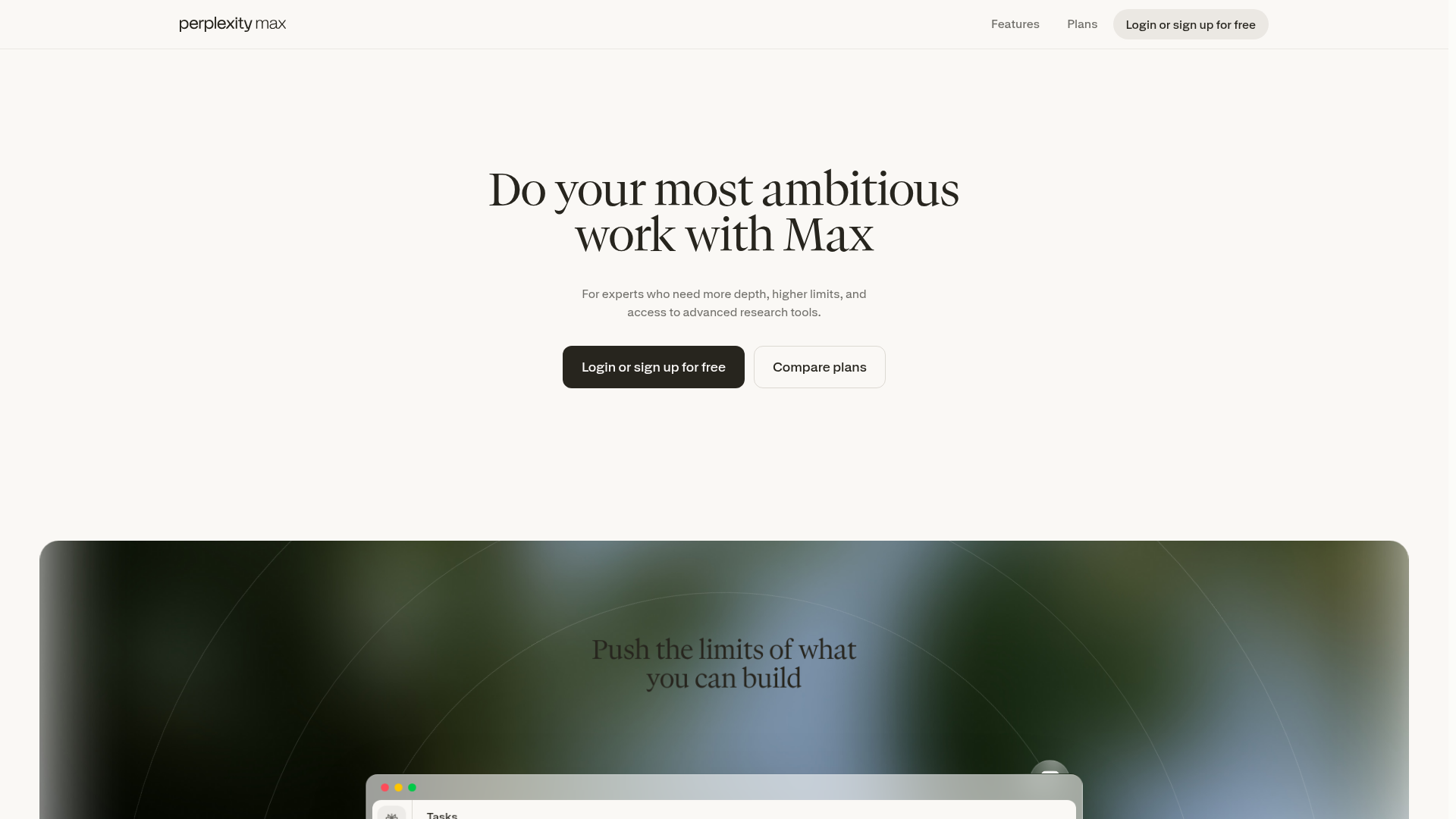
Perplexity exposes several provider models inside one research product, and its separate Search API costs $5 per 1,000 requests before Sonar token charges and request fees.
A cited answer can still misread a page or attach a source to the wrong claim. Open the decisive citations before you publish, buy, or make a policy decision.
Choose Perplexity when source visibility matters more than creative prose, then use the free plan to test citation quality on your own topics before paying.
4. Grok for X data and multimodal chat
Grok combines live web and X search with voice, image generation, video generation, and advanced reasoning, with free basic access and SuperGrok at $30 per month for Grok 4.5 access and higher limits.
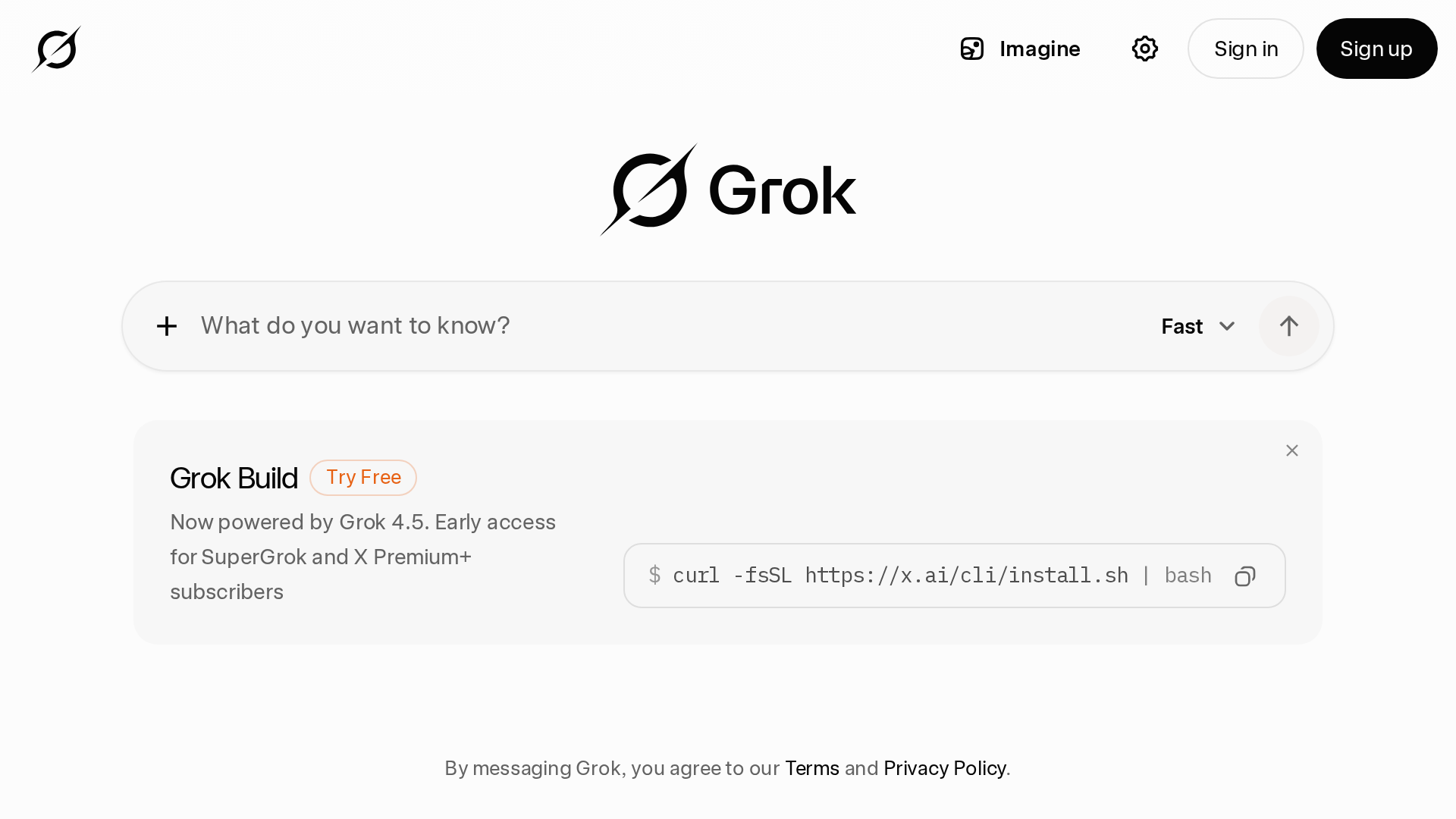
Business and Enterprise pricing requires a sales conversation, and the Grok 4.5 API costs $2 per million input tokens plus $6 per million output tokens with a 500,000-token context window.
Choose Grok when X conversations or a combined voice, image, video, and search interface are central to the task, then verify high-stakes claims against primary sources because social posts can be incomplete or wrong.
5. DeepSeek for inexpensive text and coding APIs
DeepSeek gives you free browser chat and unusually low API prices for text-heavy work, with V4 Flash and V4 Pro supporting thinking and non-thinking modes, tool calls, JavaScript Object Notation (JSON) output, and a one-million-token context length.
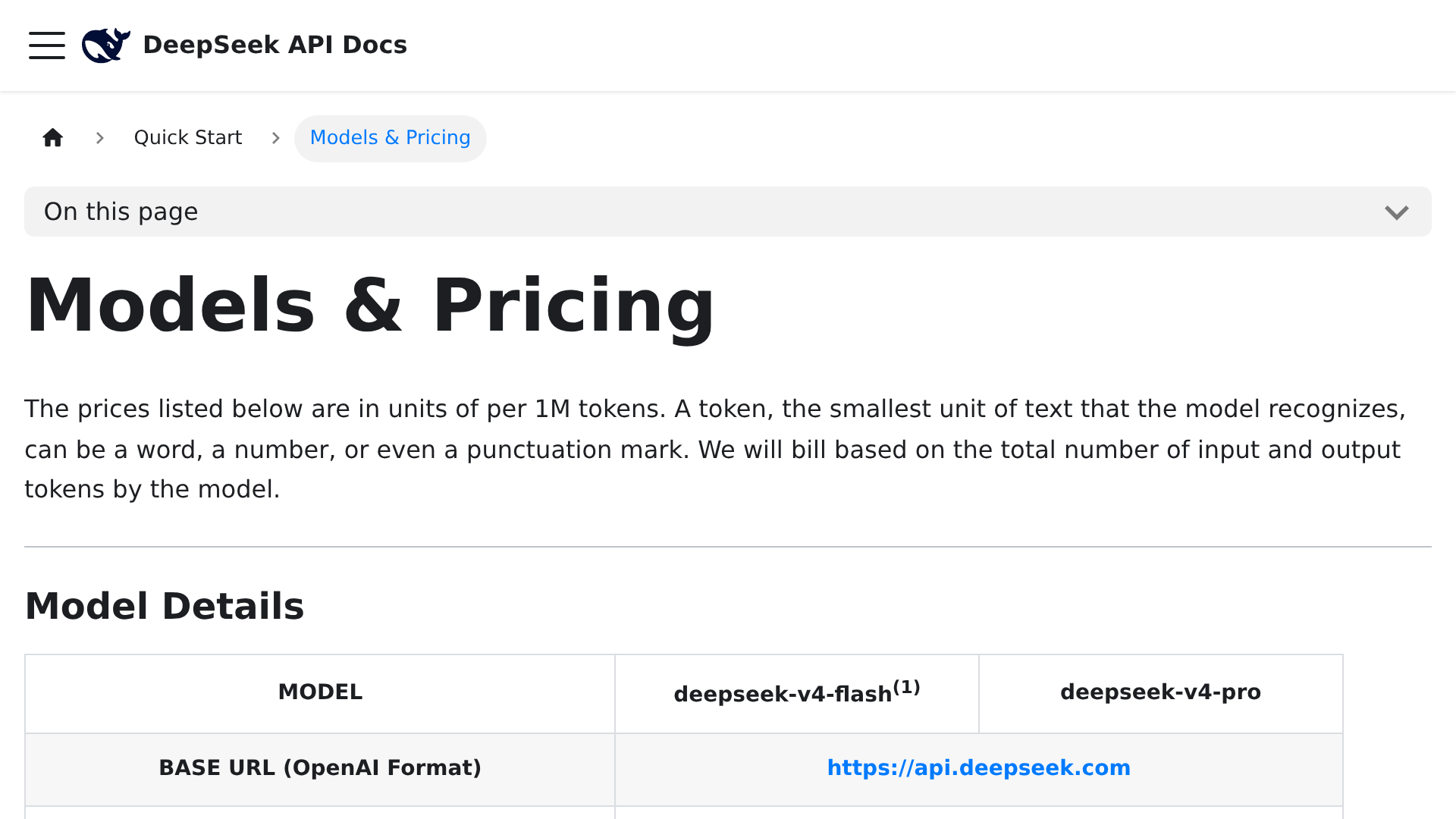
V4 Flash costs $0.14 per million uncached input tokens and $0.28 per million output tokens, and V4 Pro costs $0.435 for uncached input plus $0.87 for output, with lower cached-input rates for both.
DeepSeek chat and API use are different buying paths, so teams handling sensitive or regulated data should review hosting, retention, procurement, and regional requirements before sending production material.
Choose DeepSeek when API cost dominates the decision and text is enough, especially for prototypes that would be expensive on a premium model.
Subscription prices and API billing are separate
A monthly chat plan buys access through the vendor’s app. API calls are metered independently, so paying for Claude Pro, Google AI Pro, Perplexity Pro, or SuperGrok does not create a matching developer credit balance.
| Product | App price to test paid access | API example |
|---|---|---|
| Claude | $20 monthly for Pro | Opus 4.8 at $5 input and $25 output per million tokens |
| Gemini | $4.99 monthly for AI Plus | 3.5 Flash at $1.50 input and $9 output per million tokens |
| Perplexity | $20 monthly for Pro | Search API at $5 per 1,000 requests |
| Grok | $30 monthly for SuperGrok | Grok 4.5 at $2 input and $6 output per million tokens |
| DeepSeek | Free browser chat | V4 Flash at $0.14 uncached input and $0.28 output per million tokens |
Token prices do not capture tool calls, search fees, caching, media generation, or regional tax. Estimate one representative week from your prompts and output length before moving a production workload.
Use two tools only when the handoff earns its cost
A second assistant helps when it handles a different stage of the job. Perplexity can collect cited sources, then Claude can turn verified notes into a document, or Gemini can work with material already in Google Drive.
Avoid paying for overlapping general-chat subscriptions without a named workload for each one. You can also compare ChatGPT Free, Go, and Plus before replacing ChatGPT, then keep reusable instructions in these ChatGPT prompt templates if you stay.
Run the same work sample through two free plans and score source quality, edit time, integration steps, and usage limits. The winner should remove a measured step or produce a result you can verify more easily.
Questions about ChatGPT alternatives
Plan names and usage limits change faster than the broad strengths described above. Recheck the linked vendor pricing page before you subscribe or estimate API spend.
What is the best free ChatGPT alternative?
Claude is a strong free choice for writing and code, Gemini fits Google-based work, Perplexity is better for cited research, Grok adds X search and media tools, and DeepSeek keeps browser chat and API costs low. Test the same task on the two products closest to your workload.
Which ChatGPT alternative is best for coding?
Claude is the strongest general choice for code generation, review, and terminal work. DeepSeek is attractive when API cost matters, and Gemini fits development tasks that benefit from Google services and long mixed-media inputs.
Which alternative is best for research?
Perplexity makes sources visible inside each answer, so it is the easiest place to begin research that needs citations. Gemini and Claude also support web research, but you should open the primary sources before using any generated claim.
Can a chat subscription be used as API credit?
No. Consumer chat subscriptions and developer API billing are separate products for Claude, Gemini, Perplexity, Grok, and DeepSeek.
Should I replace ChatGPT with one of these tools?
Replace it only when another product performs your main task better or removes an integration step. Keep ChatGPT if its mix of voice, images, data analysis, and general chat covers more of your weekly work than a specialist does.