New to Rust? Grab our free Rust for Beginners eBook Get it free →
Download and Install Breach Browser in Ubuntu 14.04


The old Breach instructions name `breach-v0.3.22-alpha.6-linux-x64.tar.gz`, but a familiar filename can leave the key question unanswered: what was inside? I wanted to understand what someone opening that archive was actually trying to run.
Knowing the package’s original role gives the filename some useful context. The Breach Ubuntu package itself is the place to begin.
What the Breach Ubuntu package is
Breach was a modular browser project whose Linux alpha arrived as a prebuilt archive. The project’s GitHub releases list has no entries, and its latest reported push is from 2023.
For the project background, see the earlier Breach browser overview.
Ubuntu 14.04 left standard security maintenance in April 2019. Treat the operating system and browser archive as historical software, not a setup for everyday browsing or sensitive accounts.
The image below is a 2014 screenshot of the Breach download page.
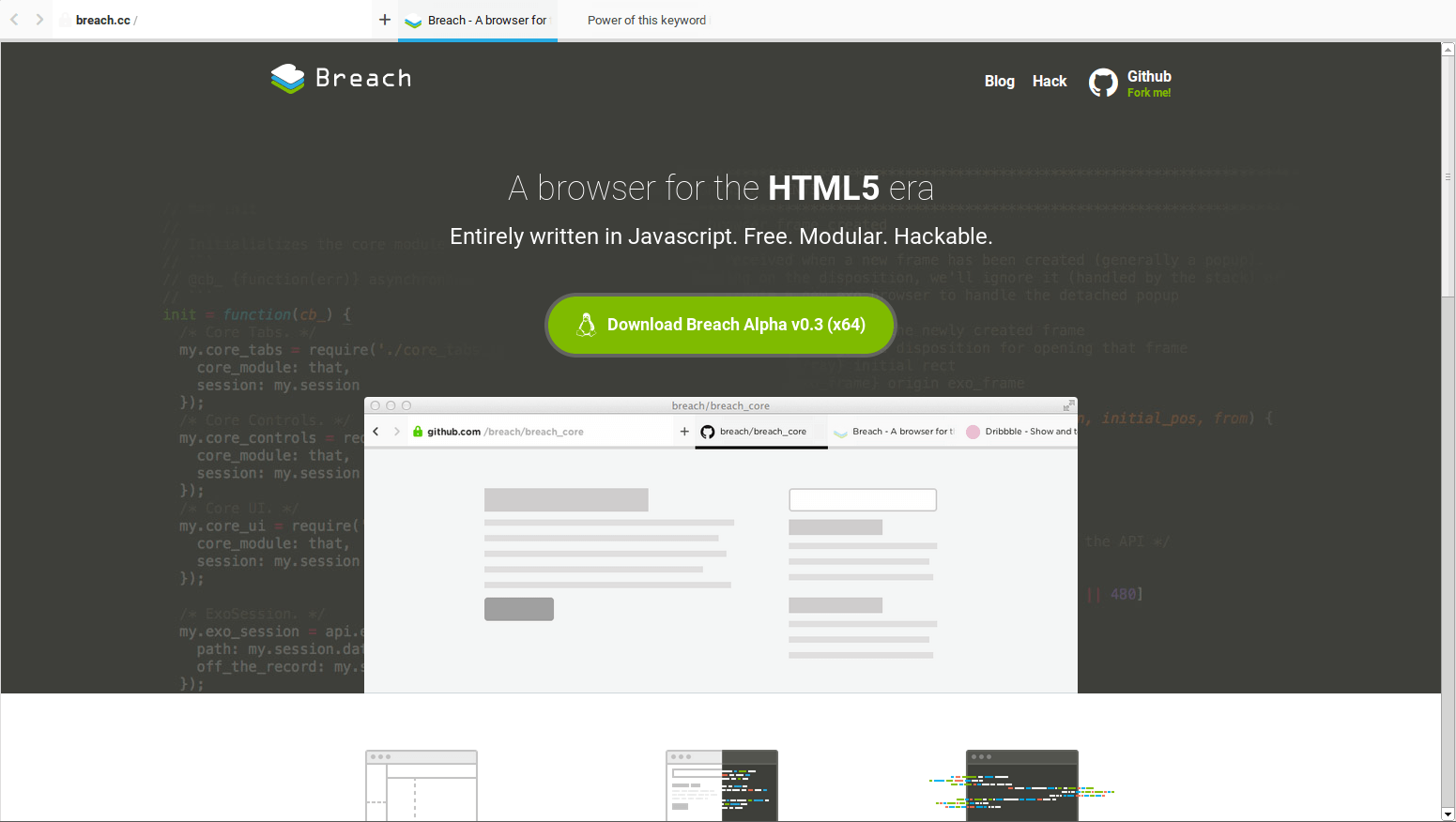
The archived page cannot promise a working or secure install because no current package or compatible library path is verified.
What you need before opening an old archive
Use an isolated virtual machine that you can discard, with networking disabled unless your experiment specifically needs it. Ubuntu 14.04 is outside standard security maintenance, and an old browser can expose the host to unpatched web content.
| Requirement | Reason |
|---|---|
| Disposable Ubuntu 14.04 VM | The operating system is outside standard security maintenance. |
| Verified archive source | The old landing page does not verify a present download. |
| VM snapshot | Restore a clean state if the experiment changes dependencies. |
If you cannot verify where the archive came from, stop there.
A familiar filename does not establish who built it or whether its contents have changed.
How to inspect the historical Linux archive
The 2014 instructions name a Linux x86_64 tarball, breach-v0.3.22-alpha.6-linux-x64.tar.gz. The old page gives that filename, but its present availability has not been verified.
- Verify the source before downloading.
- Extract as an ordinary user inside the disposable VM.
- Stop if architecture or required libraries do not match.
1. Confirm the archive and its source
Download nothing from an unverified mirror. If you already have an authenticated copy, keep it inside the disposable VM and compare its checksum with a value published by the project, if one exists. No official checksum or release asset was found in the sources checked.
2. Extract it without changing system libraries
Open the archive with the desktop archive manager and extract it into a new folder in your home directory. Do not extract it as root, and do not run a launcher until you have reviewed the archive contents and trust their source.
3. Stop if the package does not match the machine
The old package name specifies x86_64. If your Ubuntu installation uses another architecture, this build is not a match. Downloading Chromium or changing a library link will not turn it into one.
How to interpret the missing-library errors
The old launch reports mention two different shared libraries.
A dynamic linker error means the executable could not resolve a named dependency at startup, not that the browser installed successfully.
| Observed message | Meaning and safe response |
|---|---|
| libharfbuzz.so.0: cannot open shared object file | The packaged exo_browser cannot find the requested HarfBuzz library name. Use documented dependencies in a disposable VM or stop. |
| libudev.so.0: cannot open shared object file | Having libudev.so.1 does not prove interface compatibility. Do not create a symlink between them. |
The HarfBuzz message appears in Breach’s own issue tracker from 2014 and in an installation support question. Those records explain the failure people saw then, but they do not verify a fix for an Ubuntu 14.04 system now.
The linked AskUbuntu question asks, “Can anybody tell me what I’m doing wrong?” after the launcher reports the missing library.
A symbolic link changes the filename the loader opens, but not the library interface. If the binary expects functions or behavior the installed library lacks, the program can fail after startup.
Ubuntu 14.04 reached the end of standard security maintenance in 2019, so use a supported operating system and a maintained browser for personal data or internet access.
For a historical experiment, keep the virtual machine disposable and offline.
Breach browser installation questions
Can I download Breach browser for Ubuntu 14.04 today?
No current official Linux download or release asset was found in the sources checked. Treat the old package instructions as historical, and do not use an unverified mirror.
What does libharfbuzz.so.0 missing mean?
The packaged executable could not find the HarfBuzz shared library name it requested. The historical issue records the error, but it does not establish a current compatible fix.
Can I link libudev.so.1 to libudev.so.0?
No. The different library names do not prove compatible interfaces. Avoid a manual symlink and stop unless the project documents a compatible dependency for the exact build.
Is Ubuntu 14.04 safe for browsing?
Ubuntu 14.04 left standard security maintenance in April 2019. Do not use it for everyday browsing or sensitive accounts.