New to Rust? Grab our free Rust for Beginners eBook Get it free →
10 Best Open-Source Email Clients for Linux


Thunderbird puts a calendar beside your mailbox, so the app can do more than display messages. I was surprised how much that one detail can change the feel of a mail client.
Provider sign-in rules are a separate part of the decision from the tools you want beside your inbox. Together, those differences give you a practical way to judge which Linux client fits your mail.
Which Linux email client fits your mail?
For a general Linux desktop inbox, start with Thunderbird. Pick Evolution or KMail when desktop integration matters, and use a terminal client if you prefer to manage mail from the keyboard.
| Your priority | Start with | Why it fits |
|---|---|---|
| General desktop mail | Thunderbird | Several accounts and a calendar |
| Thunderbird-derived fixes | Betterbird | A fork that tracks Thunderbird’s extended-support releases and adds project fixes |
| GNOME groupware | Evolution | Mail plus calendar and contact tools |
| KDE integration | KMail | Mail within the Kontact toolset |
| Conversation-focused inbox | Geary | Groups messages into readable conversations |
| Customizable classic desktop client | Claws Mail | A mail and news reader with optional plugins |
| KDE mailbox client | Trojitá | On-demand mailbox access with a separate desktop interface |
| Keyboard-first terminal mail | NeoMutt | A configurable command-line reader with extensive guides |
| Terminal setup wizard | aerc | Mail protocols plus local mailbox backends |
| Tuta account | Tuta | An open-source desktop app for Tuta’s own mail service |
Check what your mail provider supports
The Internet Message Access Protocol (IMAP) syncs messages and folders with a mail server, while the Post Office Protocol (POP3) follows a different retrieval model. Simple Mail Transfer Protocol (SMTP) sends outgoing messages.
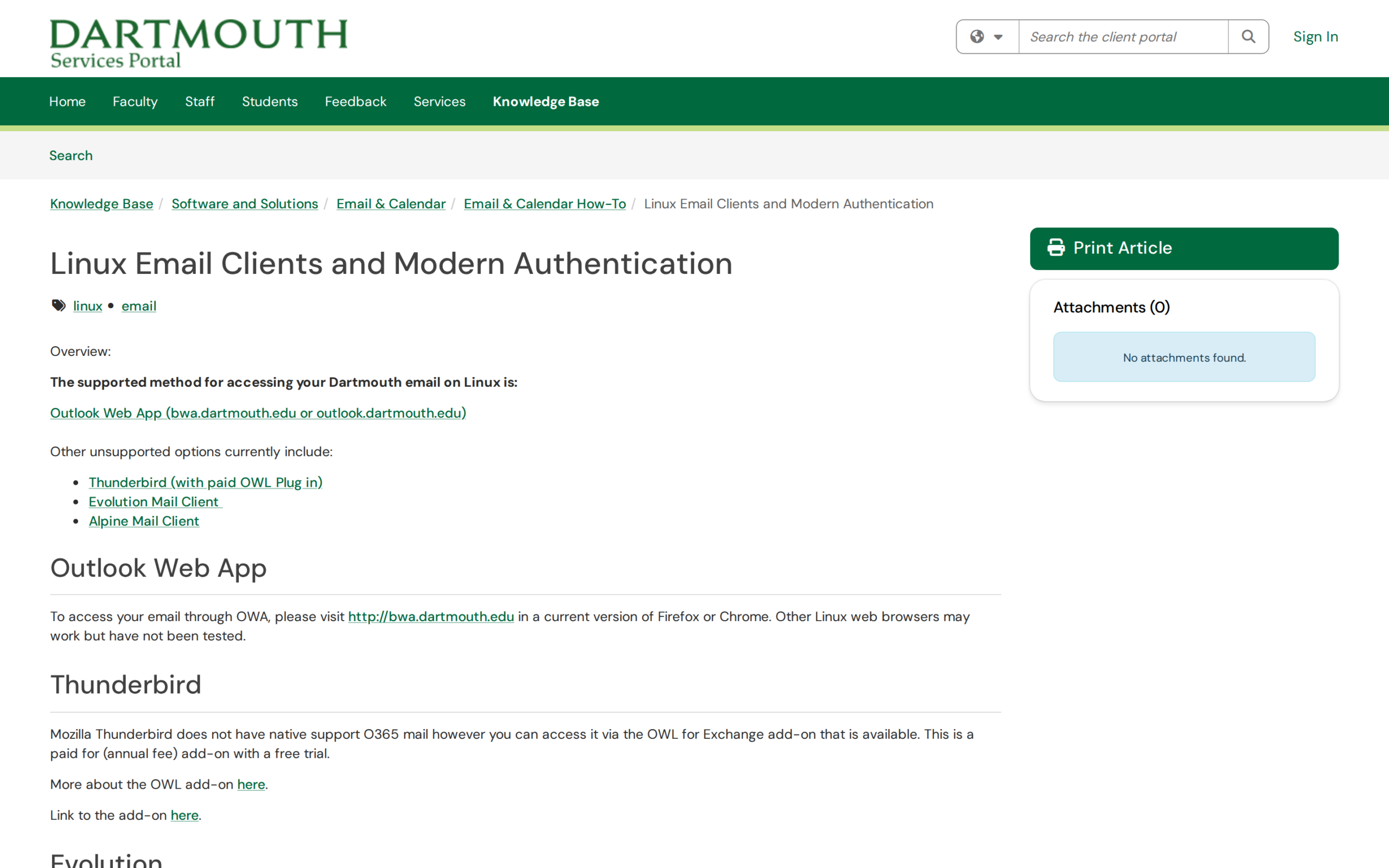
A client listing IMAP or Exchange support does not guarantee that your account can sign in. Providers and workplace administrators can require a particular authentication method or restrict third-party apps, as Dartmouth’s Linux email guidance illustrates for its own Microsoft 365 accounts.
| Before setup | Confirm |
|---|---|
| Incoming and outgoing mail | Your provider’s required protocols and server settings |
| Sign-in method | Open Authorization (OAuth) or the provider’s other sign-in method. Confirm that third-party apps are permitted. |
| Desktop features | Whether mail alone is enough or you also need calendars and contacts |
Open-source Linux email clients to consider
The ten choices serve different mail workflows and account setups.
Thunderbird
Thunderbird is a good starting point when you want a full desktop client for several accounts. Its official desktop page offers Linux downloads and lists a calendar alongside its mail tools.
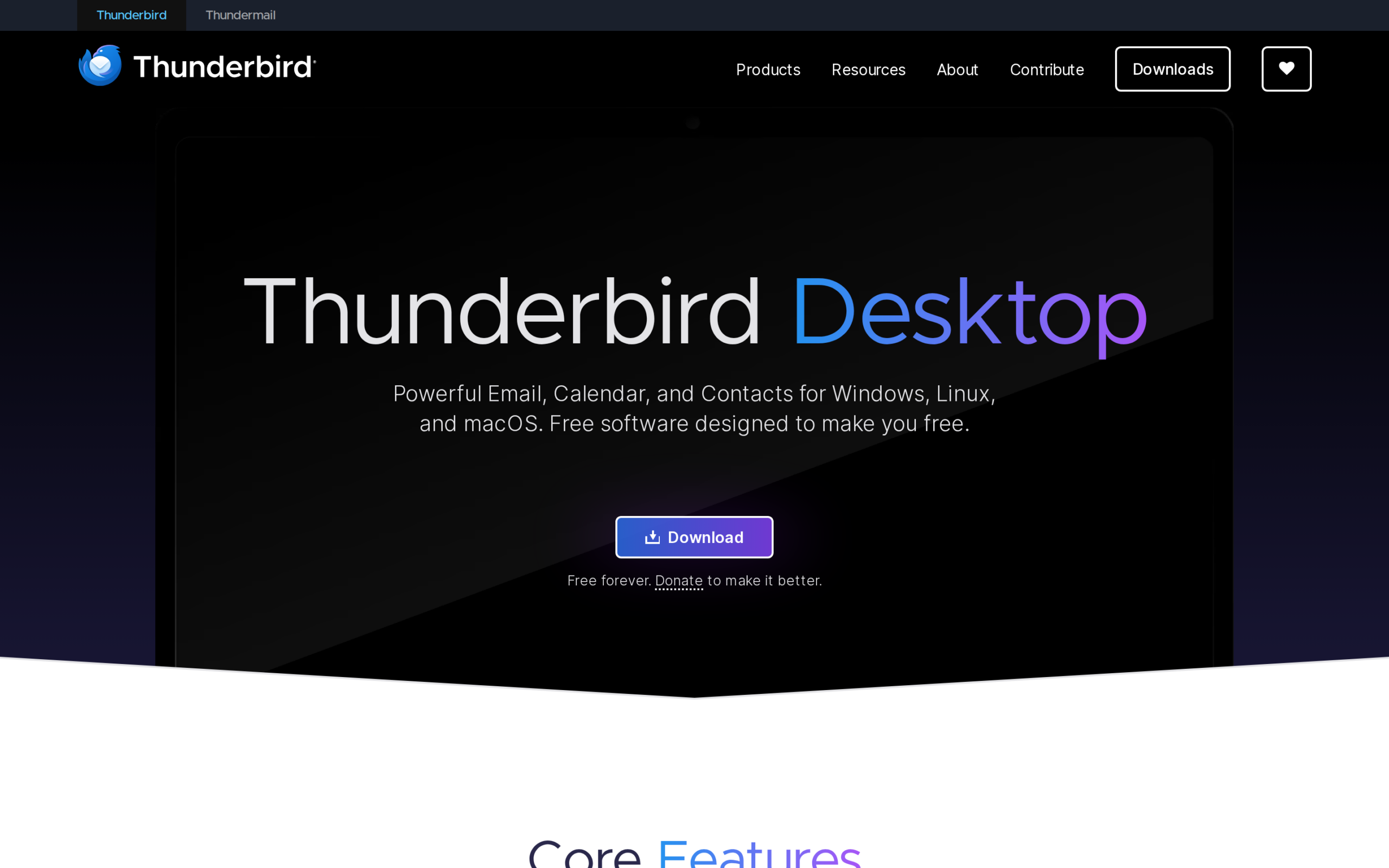
Choose Thunderbird for a familiar desktop workflow with account and calendar tools.
Betterbird
Betterbird is a soft fork of Thunderbird that follows its Extended Support Release (ESR) line while adding project-specific fixes and features. Its FAQ explains the relationship, and the downloads page lists Linux Archive builds.
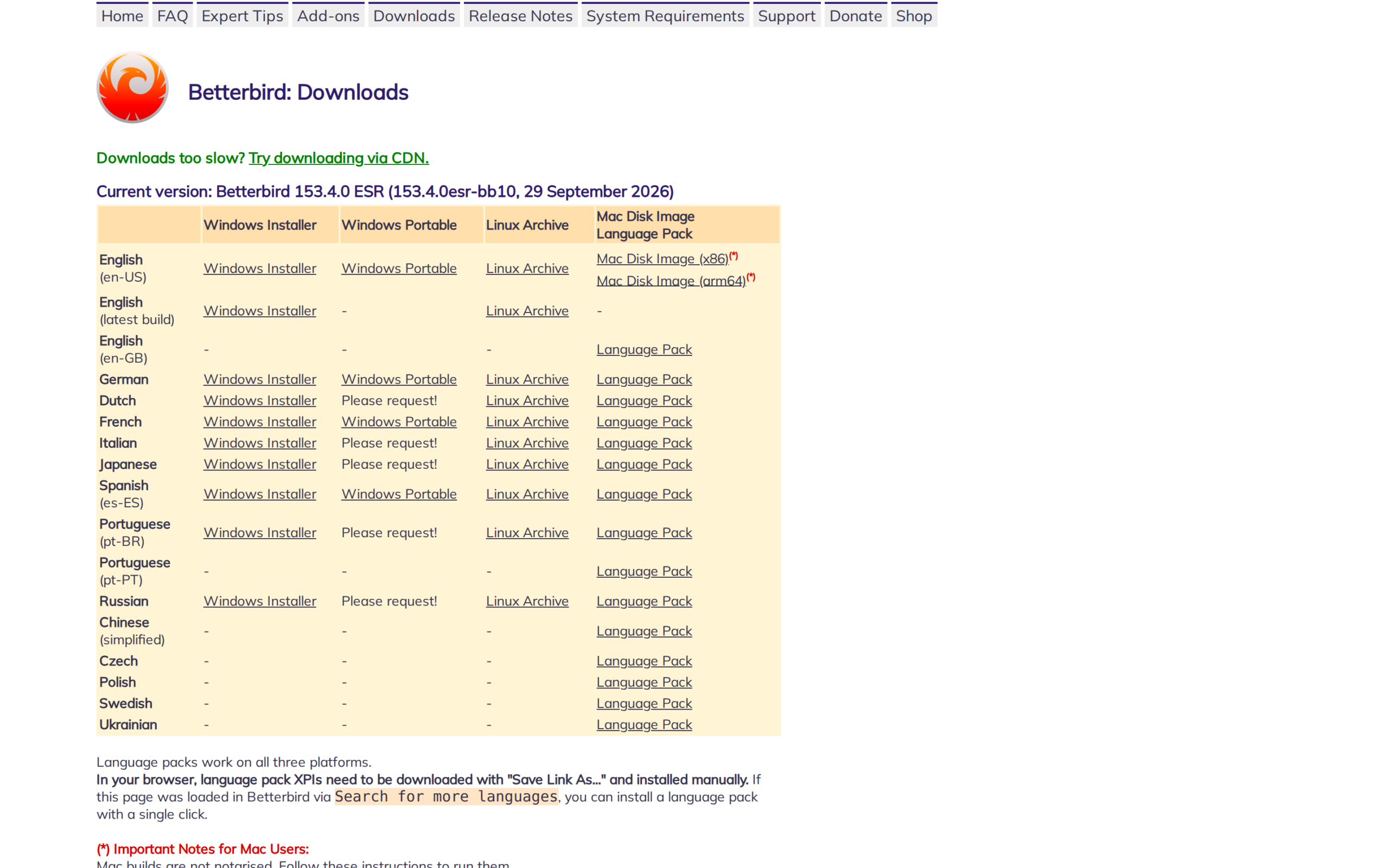
The download page lists release 153.4.0 ESR dated 29 September 2026. Betterbird is a separate project, so check its support guidance before moving a profile or expecting every Thunderbird add-on to behave the same way.
Evolution
Evolution suits GNOME users who want mail beside calendar and contact tools. The GNOME help documents those integrations.
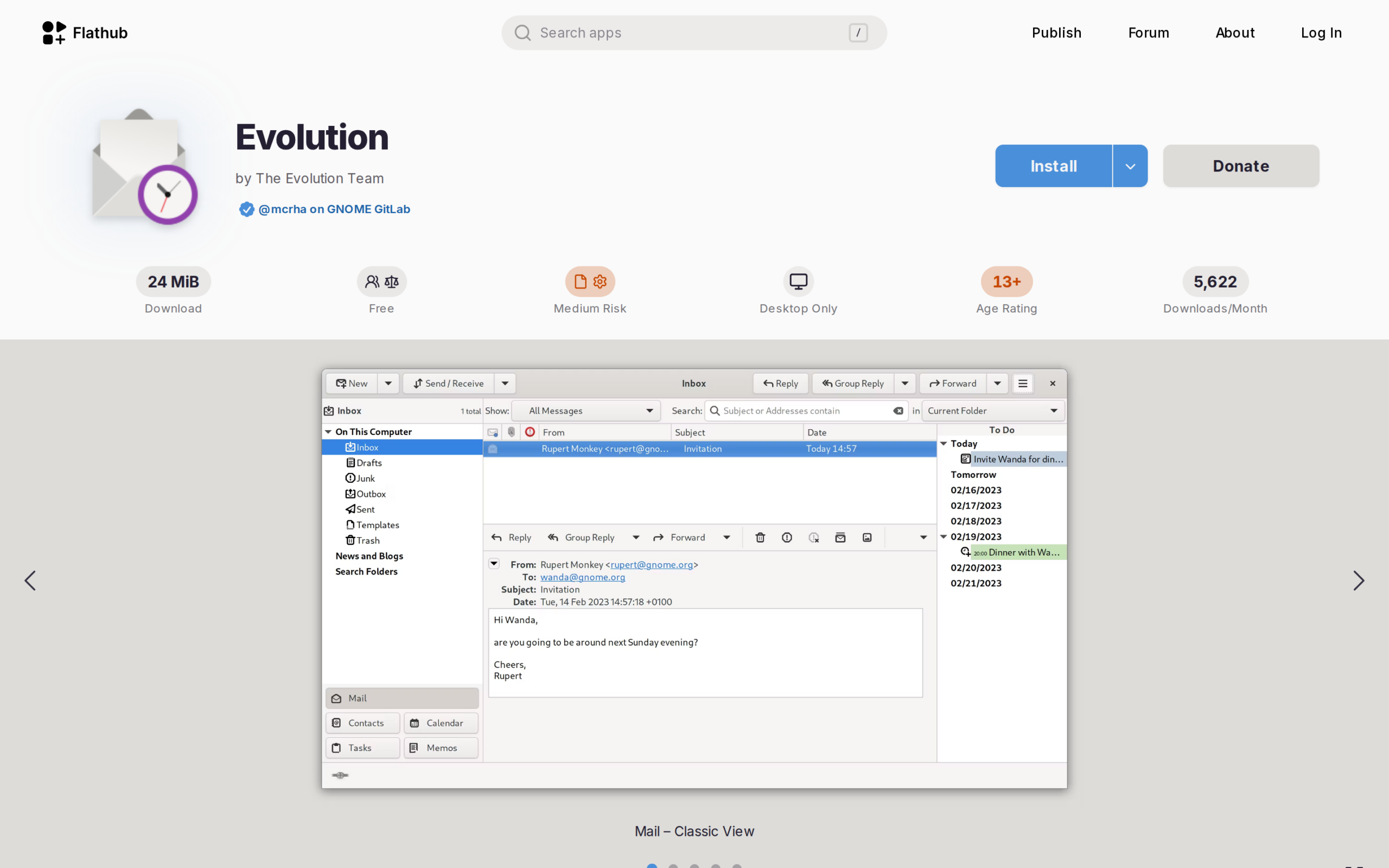
Choose Evolution when calendar and contact tools belong beside your inbox.
KMail
KMail fits KDE users who want email connected to the Kontact suite. Its KDE page documents IMAP and Exchange Web Services (EWS), plus filtering and offline use.
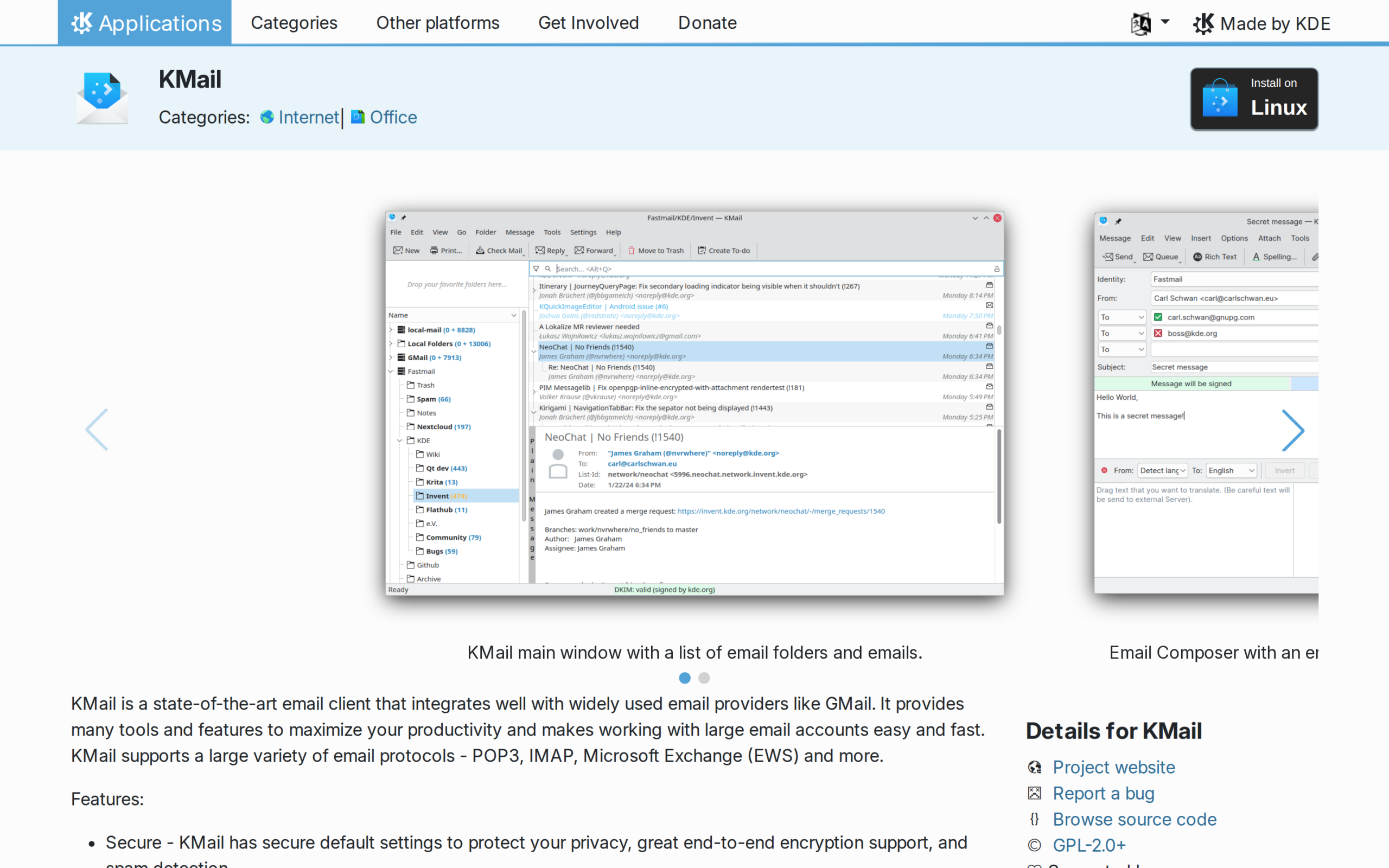
KMail is worth considering when KDE integration matters more than a standalone mailbox window. EWS support does not guarantee access to every Exchange tenant, because the account’s administrator and sign-in policy can limit the connection.
Geary
Geary organizes mail around conversations and connects with GNOME Online Accounts. The GNOME project page describes its focused inbox workflow.
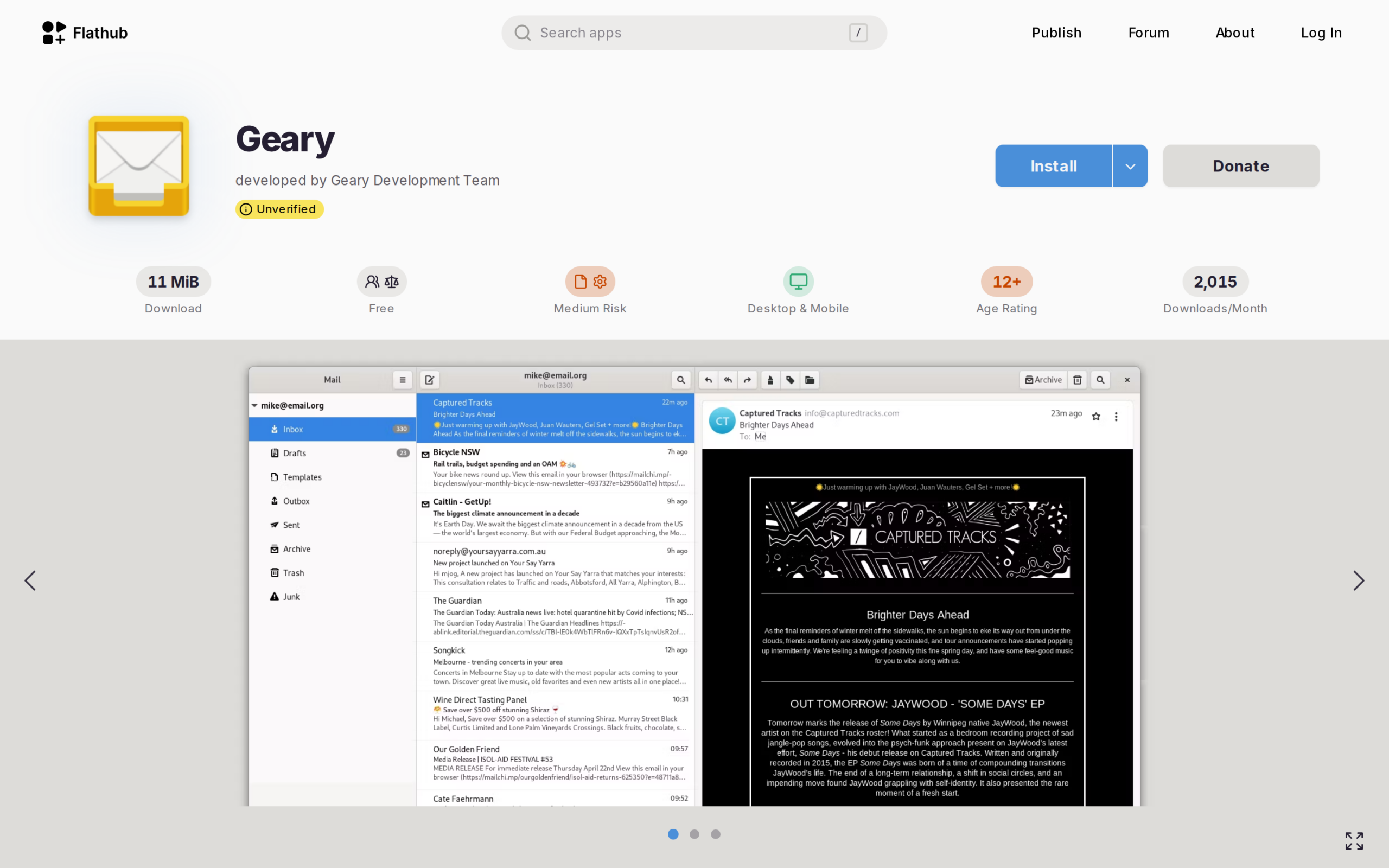
Geary gives you a conversation-focused inbox, but Flathub marks its listing Unverified, so check who maintains that build before installing.
Claws Mail
Claws Mail’s project site describes a lightweight email and news client with optional plugins. It lists the GNU General Public License (GPL).
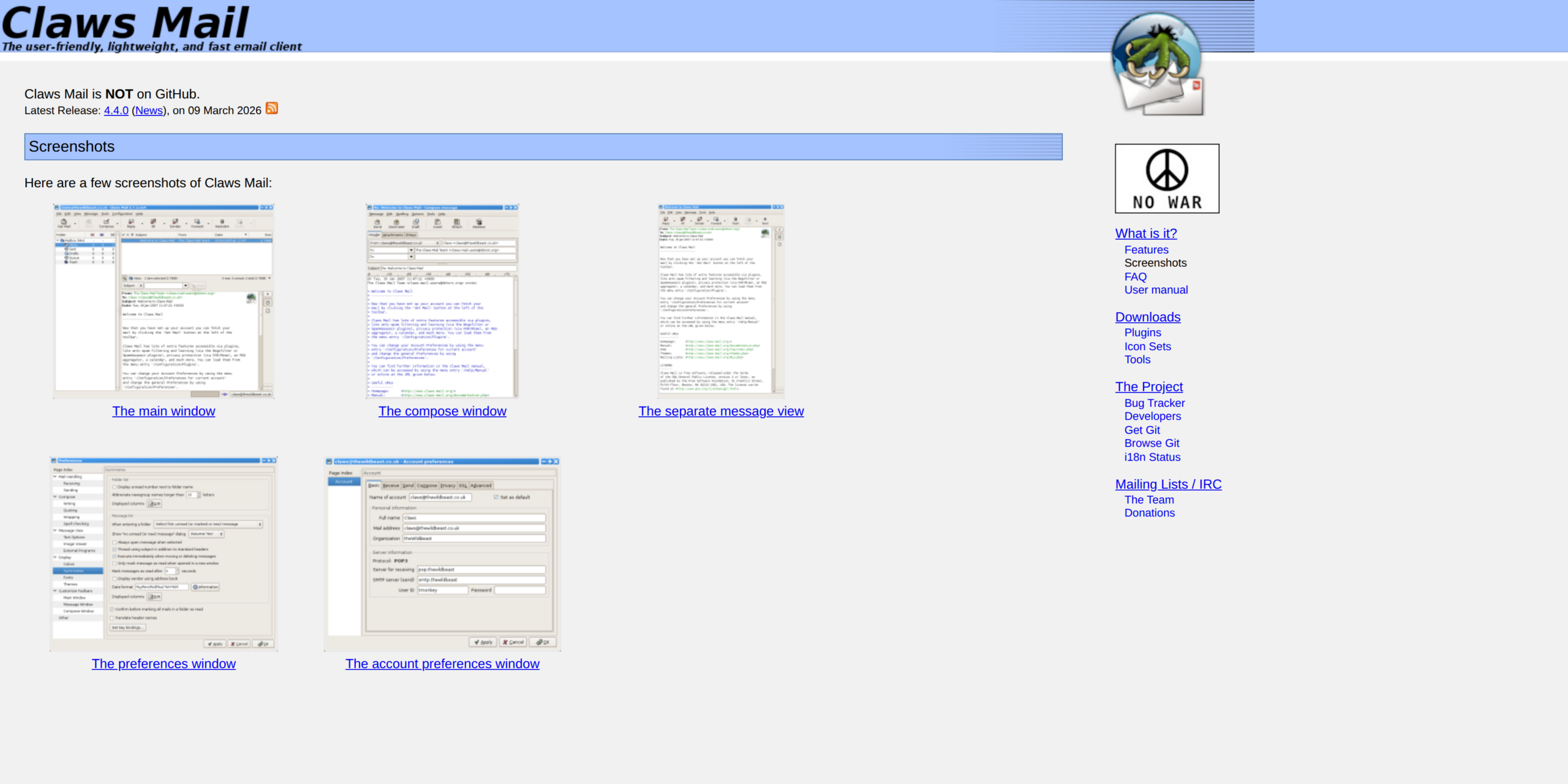
The project lists release 4.4.0 dated 9 March 2026. Claws Mail’s plugin model suits you if you want to add features selectively, while the screenshot page shows its more traditional window layout.
Trojitá
Trojitá is a KDE email client focused on IMAP and on-demand mailbox access. The KDE page describes loading message lists and bodies when requested and lists GPL-2.0+ licensing.
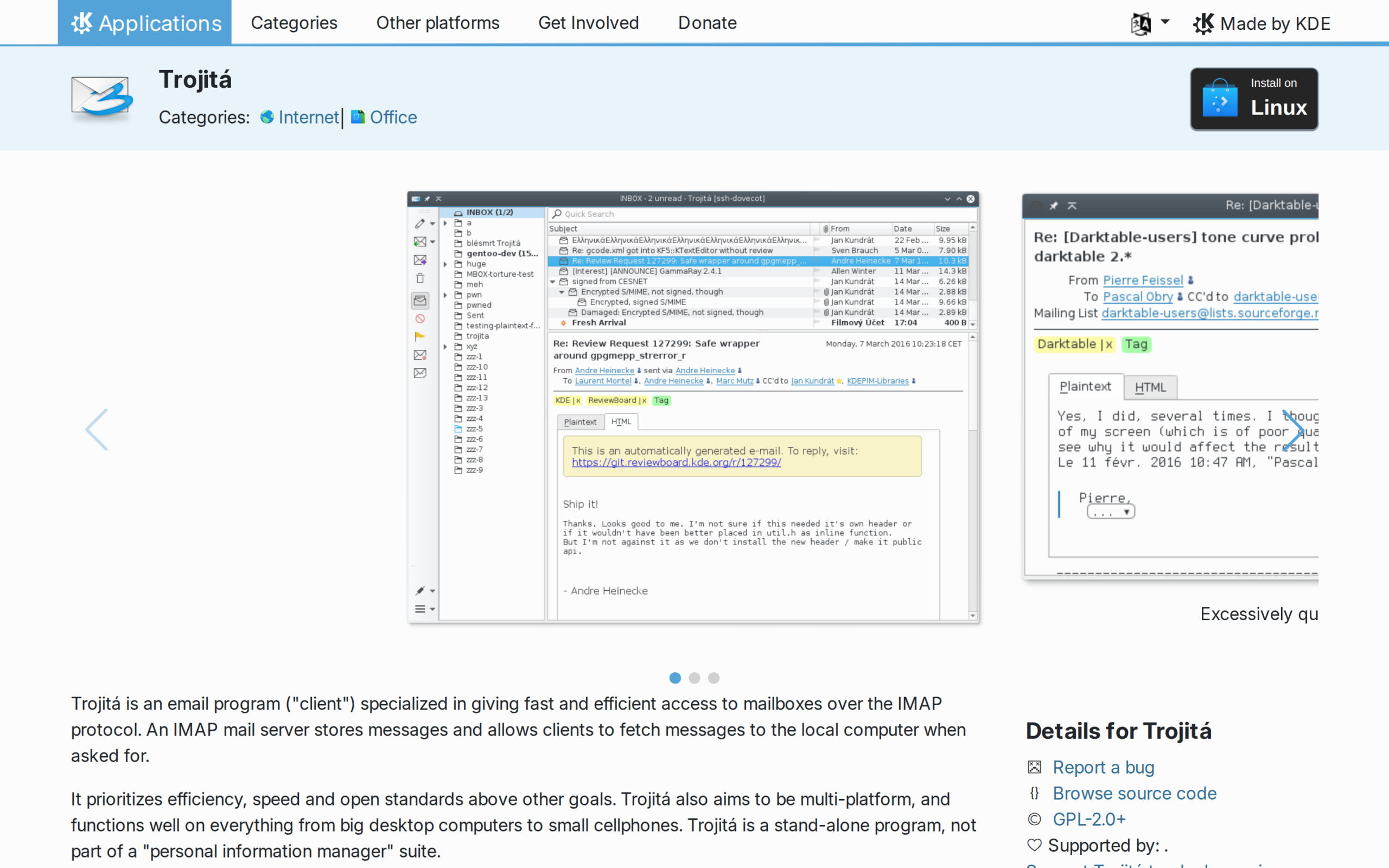
KDE’s page lists release 0.7 from 2016, while the linked source repository shows a code fix in August 2026 and repository sync commits through 28 September 2026. Check your distribution package and provider’s sign-in requirements before choosing Trojitá for a primary mailbox.
NeoMutt
NeoMutt is a command-line mail reader built as a fork of Mutt. Its guide explains account setup and OAuth, plus offline sync.
Choose NeoMutt if you want keyboard-driven control and do not mind maintaining a text configuration. Its guide separates mailbox access from sending and offline sync, which may involve tools such as msmtp or mbsync.
aerc
aerc is a terminal email client with the JSON Meta Application Protocol (JMAP) and IMAP support plus local mailbox backends. The project page also shows its account-setup wizard in a paused screencast.
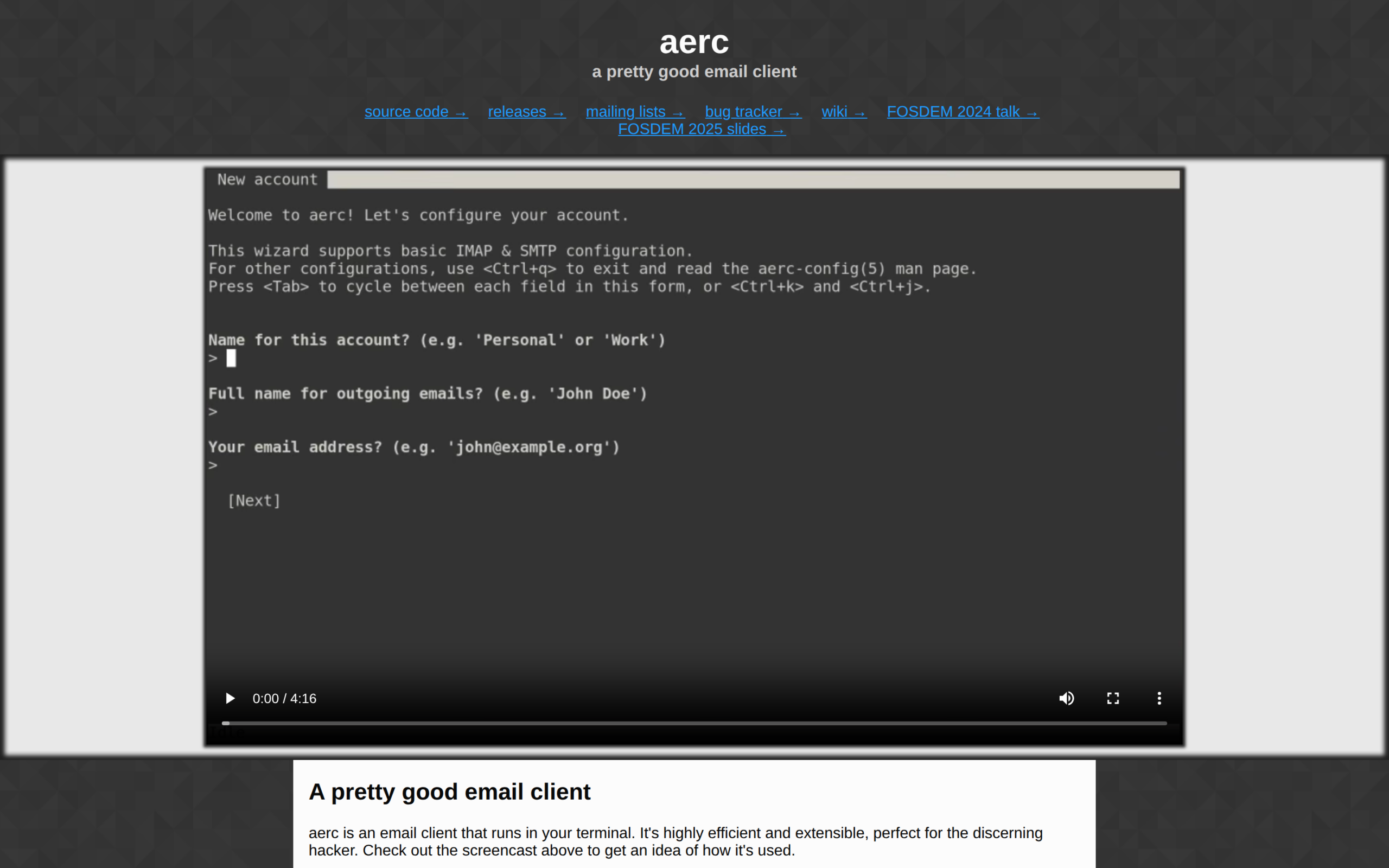
The wizard asks for account details before you connect. Its IMAP and JMAP operations run asynchronously, so the terminal interface stays responsive on a flaky network.
Tuta
Tuta’s Linux desktop client is open source and built for the Tuta Mail service. The vendor’s desktop-client page describes its encrypted mail workflow.
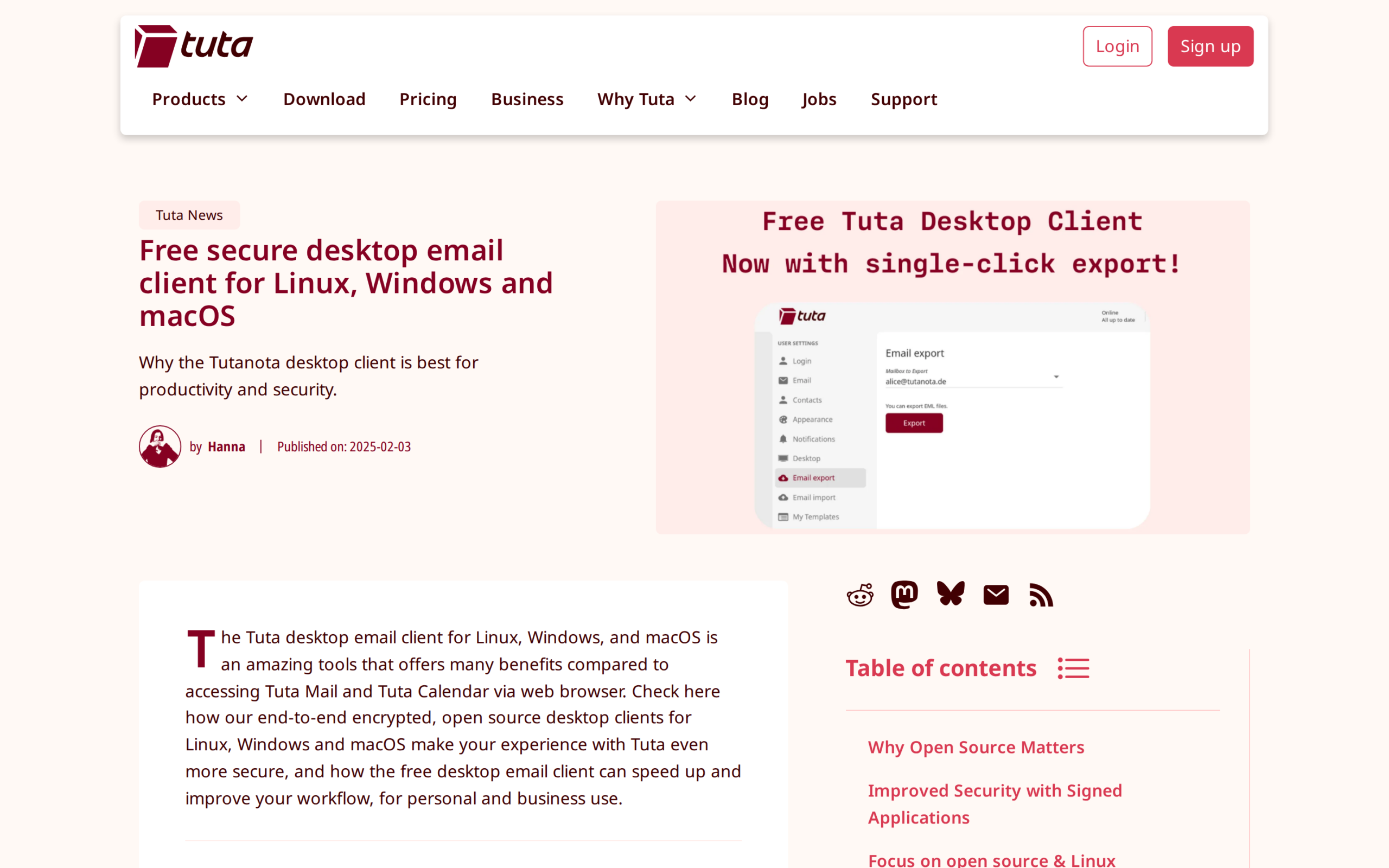
Tuta is not a general IMAP client, so it will not replace a desktop app for an unrelated mailbox. Choose it when you want Tuta’s own mail service and are comfortable keeping mail inside that account ecosystem.
When an open-source client cannot sign in
Account setup can fail even when a client supports the server’s protocol. Modern authentication and administrator rules decide whether an app may connect, so match the symptom to the provider’s instructions before switching clients.
| What happens | What to check |
|---|---|
| The sign-in screen rejects the account | Check the provider’s approved client and authentication method. Ask an administrator about third-party app access. |
| Mail arrives but sending fails | Check the provider’s SMTP settings and whether the account permits that sending method. |
| Exchange access is unavailable | Confirm the tenant supports the connection method used by the client. EWS in a feature list does not guarantee account access. |
| A Tuta address will not add to another IMAP client | Use Tuta’s own client or web app because its desktop client is tied to the Tuta service. |
Dartmouth’s Linux mail instructions are an institution-specific example. Follow your provider’s setup page rather than treating another institution’s policy as universal.
Test one account before moving your archive
The provider controls account access, while the client shapes how you work with mail. Test one account before importing or moving stored mail.
- Read the provider’s setup instructions and check its sign-in requirements.
- Add one account while keeping the old client and its local archive untouched.
- Send and receive a test message, then check the folders and calendar features you rely on.
- Move the rest only after the new client shows the mail you need and can send successfully.
Frequently asked questions
What is the best open-source email client for Linux?
For a general desktop inbox, start with Thunderbird. Choose Evolution or KMail when their desktop integration matters, and choose a terminal client when you want to work from the keyboard.
Will Thunderbird or KMail work with every Microsoft 365 account?
No client feature list guarantees access to every tenant. KMail documents Exchange Web Services, but provider settings and administrator authentication policy decide whether that account can connect.
Does Tuta work with a standard IMAP provider?
No. The Tuta desktop client is for Tuta’s own mail service, not a general IMAP mailbox.
Is Trojitá actively maintained?
KDE’s app page lists release 0.7 dated 15 June 2016. The KDE-linked source repository includes a code change dated 3 August 2026 and sync commits through 28 September 2026, so check your distribution package before installing it.