New to Rust? Grab our free Rust for Beginners eBook Get it free →
What are Blockchain-Based Messaging Systems?

A blockchain-based messaging system uses cryptographic identities and a distributed network to coordinate messages without placing one company in charge of every account and delivery decision. The useful design question is where the blockchain belongs, because message content, encryption keys, and delivery usually need different components.
What is a blockchain-based messaging system?
A blockchain-based messaging system combines a messaging protocol with blockchain-backed identity, authorization, payment, integrity records, or shared coordination. It does not require every message to become a public blockchain transaction.
Modern systems often use a wallet or another signed credential to prove who controls an identity, then encrypt content for recipients and use a relay network or peer-to-peer transport to deliver encrypted envelopes.
XMTP documents a protocol for end-to-end encrypted communication between identities that can make verifiable signatures, while its network stores and relays encrypted messages between clients.
How the architecture fits together
The components have separate jobs. Treating them as one blockchain database leads to expensive storage, public metadata, and weak deletion options.
Identity and authorization
A signed wallet address can establish control of an identifier without a password database, but an application still needs rules for contact requests, group membership, device recovery, abuse handling, and key rotation.
Encryption and group membership
End-to-end encryption protects message content from relay operators when the protocol and clients implement it correctly. XMTP uses Messaging Layer Security, an Internet Engineering Task Force standard that supports forward secrecy and post-compromise security for group communication.
Delivery and storage
Relay nodes can carry encrypted envelopes while clients decide how to present messages. Large attachments and editable content commonly need off-chain storage because a blockchain is a costly and permanent place for application data.
What belongs on-chain?
An on-chain record can help with shared coordination when multiple parties need the same auditable state, such as a public identity registry, a payment condition, a consent record, or a content digest.
Put only data on-chain that can remain visible and durable under the chain’s rules. A digest can show that bytes match a recorded value, but it does not hide those bytes or prove that their original meaning was correct.
import hashlib

message = b"hello"
digest = hashlib.sha256(message).hexdigest()
print(digest)
print(hashlib.sha256(b"hello").hexdigest() == digest)
Save the file as hash_integrity_demo.py, then run the command below from the directory that contains it.
python3 hash_integrity_demo.py
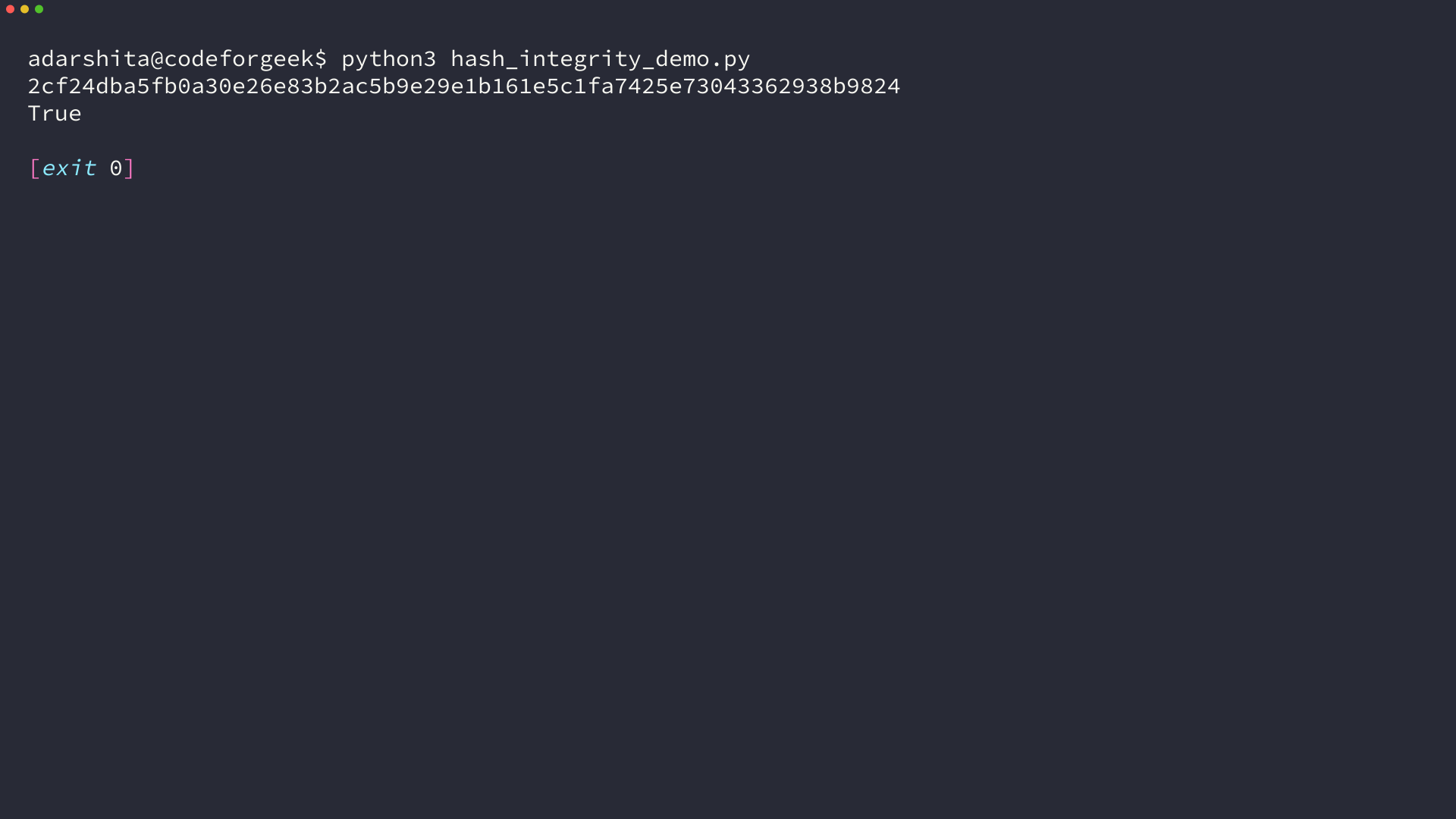
I ran this check with Python’s hashlib module. The output confirms that identical bytes produce the recorded digest, which is an integrity check rather than encryption.
Security and privacy boundaries
Message confidentiality depends on encryption, recipient-key verification, client security, and whether a service can observe routing data. Decentralized delivery alone does not establish that boundary.
Metadata deserves its own threat model. Sender identifiers, recipient identifiers, timestamps, group membership, IP addresses, and retention policies can expose relationships even when message text is encrypted.
XMTP’s FAQ states that encrypted payloads in its blockchain and node databases are stored indefinitely. An application needs to explain what users can delete and what remains in network storage.
Tradeoffs you need to plan for
Blockchain coordination adds signing, key management, transaction costs, and recovery work. A conventional encrypted messaging service is often a better fit when one organization can safely operate the identity and delivery layers.
Use a distributed design when independent participants need shared rules without giving one party sole control. Define participant roles, disputed state, the privacy boundary, and recovery before choosing a chain.
When should you use blockchain for messaging?
Use blockchain-backed messaging when signed identity, shared coordination, or a verifiable record changes what participants can do. Use a conventional messaging stack when fast delivery, low cost, deletion controls, and centralized operations fit the product’s trust model.
Before selecting a protocol, write down who controls identity, who can read content, where encrypted envelopes live, how long they stay there, and how a person recovers a lost device. Those answers determine the architecture more reliably than the word blockchain.